
How to Heal From an Affair: Navigating the Aftermath of Emotional Pain
Healing after an affair is hard. Deeply, existentially hard. If you're reading this thinking, "Why am I still this broken?" or "Why can't I just move on already?" you need to know something important. You're not failing. You're grieving.
An affair doesn't just break trust. It breaks reality. What you thought was true about your relationship, your partner, and often yourself, suddenly feels unreliable. That disorientation you're experiencing isn't drama or weakness. It's actual relational trauma. Your world has been turned upside down, and finding your footing again takes time.
One of the most confusing parts of healing from an affair is how nonlinear the process feels. You can feel okay one day, hopeful even, maybe experiencing moments of genuine connection with your partner. Then the next day, you're completely undone by a song on the radio, a particular date on the calendar, or a random thought that catches you off guard. People might ask, "Well, didn't you decide to stay?" as if that decision means the pain should just stop. That's not how our nervous systems work.
What Healing Actually Looks Like
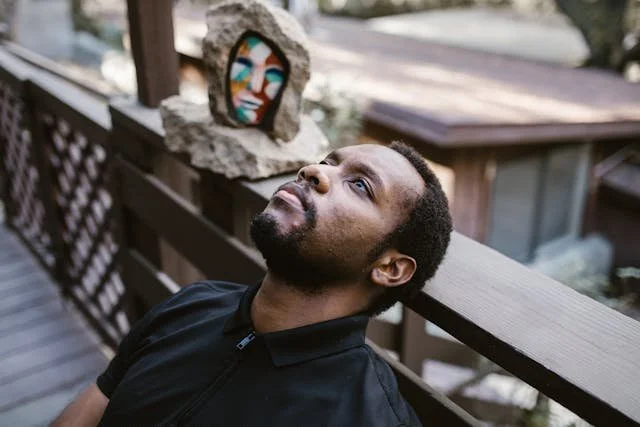
Healing after an affair includes rebuilding safety in the relationship, processing the betrayal trauma you've experienced, making sense of what happened without drowning in self-blame, and deciding over time what the relationship is going to become, if it continues at all. Staying is absolutely a choice, but staying doesn't mean you get to skip the hard work of healing.
For the Partner Who Was Betrayed
For the betrayed partner, there's often a constant internal tug-of-war happening. Part of you wants reassurance. Another part wants answers. Part of you wants to protect yourself by staying alert, hypervigilant even, watching for any sign that something might happen again. That's not you being controlling or paranoid. That's your nervous system saying, "Something unsafe happened here, and I'm trying to prevent it from happening again." Your body is doing exactly what it's designed to do.
For the Partner Who Had the Affair
For the partner who had the affair, healing requires more than apologies. It requires consistency over time, willingness to answer the hard questions even when they're repeated, accountability without defensiveness, and patience for the fact that trust rebuilds slowly. Repair isn't about saying the right thing once. It's about showing up the same way over and over again, even when progress feels painfully slow.
Healing Doesn't Mean Forgetting
Healing isn't all about "forgive and forget." It means integrating what happened into the story of your relationship without letting it define everything forever. That integration takes time, and it takes support, often professional support. Couples therapy, especially trauma-informed or EFT-based work, can help couples navigate this difficult terrain without retraumatizing each other in the process.
You can heal even if the relationship doesn't continue. Sometimes healing looks like rebuilding trust together and creating something new from the broken pieces. Other times, it looks like reclaiming your sense of self, your boundaries, and your worth on your own. Both paths require tremendous courage. Neither path is a failure.
Living with Uncertainty
A big part of healing is learning to tolerate uncertainty. You may not know yet if you'll stay, if you'll fully trust again, or what the relationship will look like long term. That limbo can feel absolutely unbearable. But clarity often comes after stabilization, not before.
If you're in the aftermath of an affair and everything feels raw, that makes complete sense. Healing doesn't mean rushing to peace. It means allowing yourself to move through the pain with support, honesty, and self-compassion. The goal isn't to go back to how things were. It's to decide consciously what comes next. Affair recovery therapy can help you with that decision.
I specialize in helping couples navigate the aftermath of infidelity with compassion and evidence-based support. If you're struggling to find your way through this pain, I'm here to help. Reach out to schedule your consultation.